IoT Tomato Plant Disease Monitoring & Early Detection
Edge IoT environmental telemetry station and deep learning mobile application for real-time microclimate sensing and automated crop disease diagnosis.
1. Context & Problem Statement
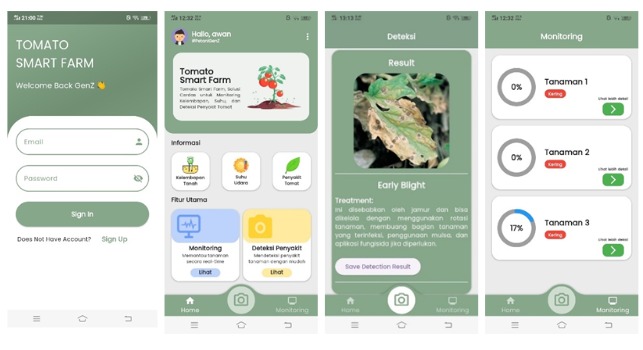
The system combines an IoT environmental monitoring station with a mobile deep learning computer vision model to diagnose plant diseases before visible crop failure occurs.
2. System Architecture & Workflow
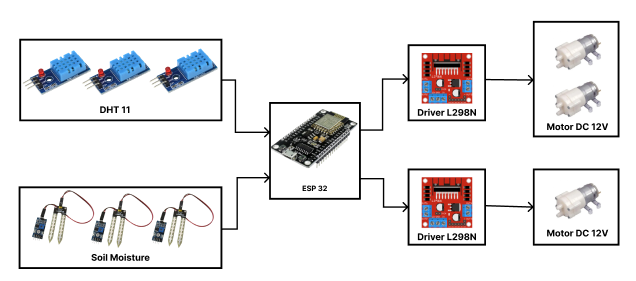
[Greenhouse Sensor Array] (DHT22, Soil Moisture, LDR)
             │
             ▼
[ESP32 Edge Microcontroller]
             │ (HTTP)
             ▼
[Cloud Backend & Database]
             │
             ▼
[Android Mobile Application]
  ├─ Real-Time Sensor Telemetry
  ├─ On-Device TFLite Leaf Disease Classifier
  └─ Microclimate Risk Warning System
3. Technical Highlights & Automation
• Autonomous Sensing: Node wakes every 15 minutes, samples 4 sensors, transmits JSON payload, and enters 15μA deep sleep. • Predictive Alarm: Backend calculates VPD (Vapor Pressure Deficit) and alerts farmer when conditions are optimal for fungal spore germination.
4. Measurable Results & Impact
Demonstrated the practical convergence of embedded electronics, IoT connectivity, and applied machine learning in precision agriculture.
Engineering Retrospective
Edge AI and low-power firmware design require rigorous optimization of memory footprints and compute cycles.
Related Case Studies

End-to-end IoT monitoring pipeline streaming real-time machine telemetry from ESP32 microcontrollers and Modbus PLC networks to desktop and web dashboards.
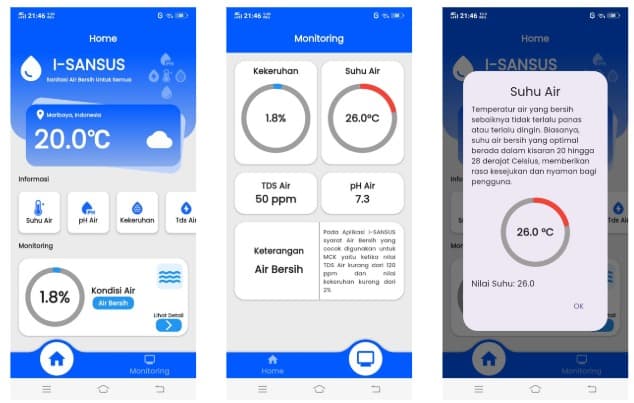
An IoT-based water quality monitoring system built using ESP32, a custom HTTP backend, Flutter, and MongoDB. The system collects water parameter data from multiple sensors, including temperature, pH, turbidity, and TDS. Sensor readings are sent from the ESP32 to the backend via HTTP, stored in MongoDB, and displayed in a Flutter mobile application for realtime monitoring and water quality evaluation.