Automated Escape Detection: Industrial OCR Inspection System
Real-time OCR inspection system that reads and verifies setting parameters on remote control LCD screens, reducing defect escapes from multiple per week to 0–1.
1. Context & Problem Statement
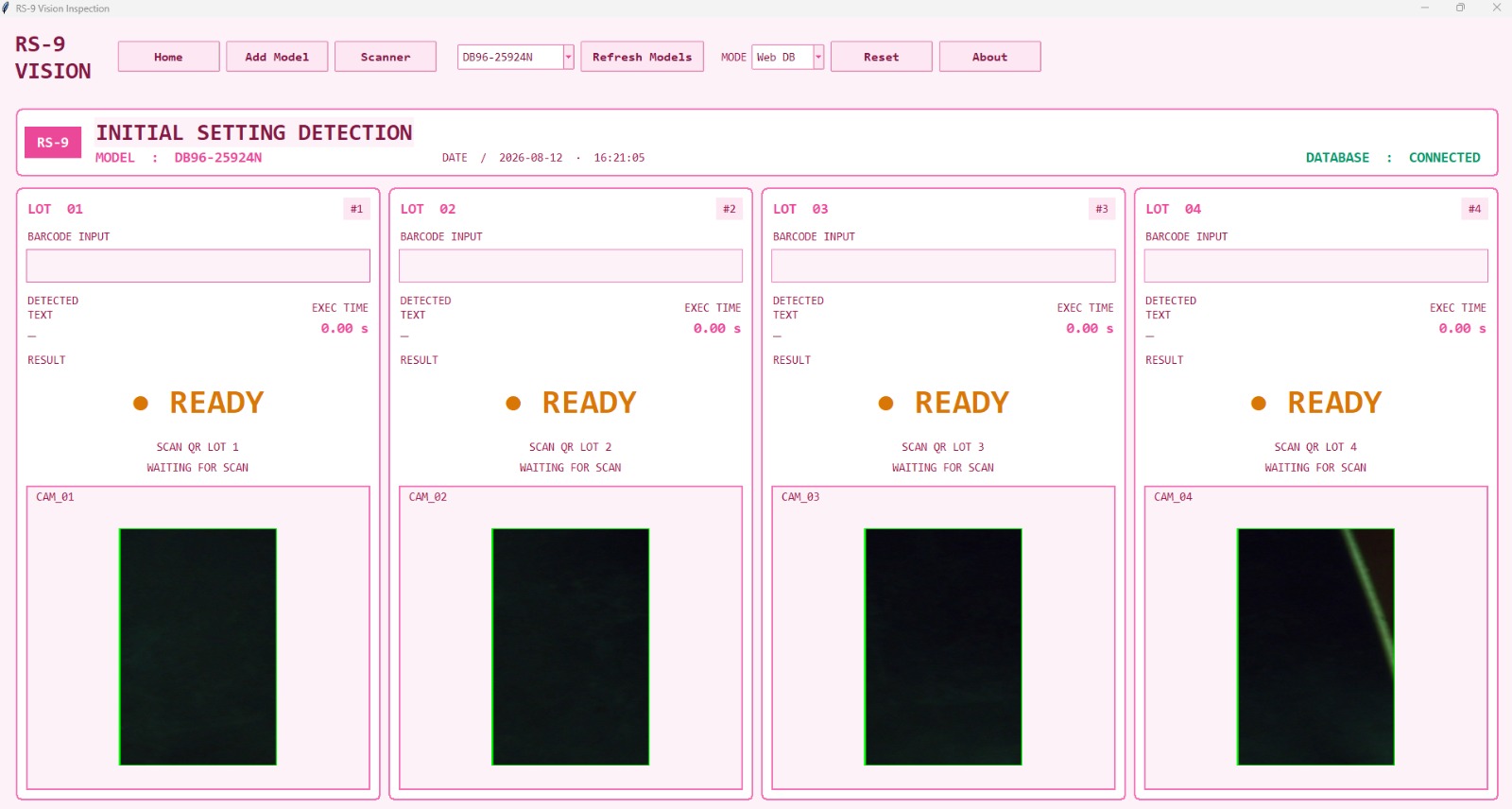
Operators previously verified the LCD display of remote-control units manually to confirm that the text "INITIAL SETTING" appeared correctly during inspection. Because the task was repetitive and depended on visual judgement, it introduced the risk of missed defects and inconsistent inspection results.
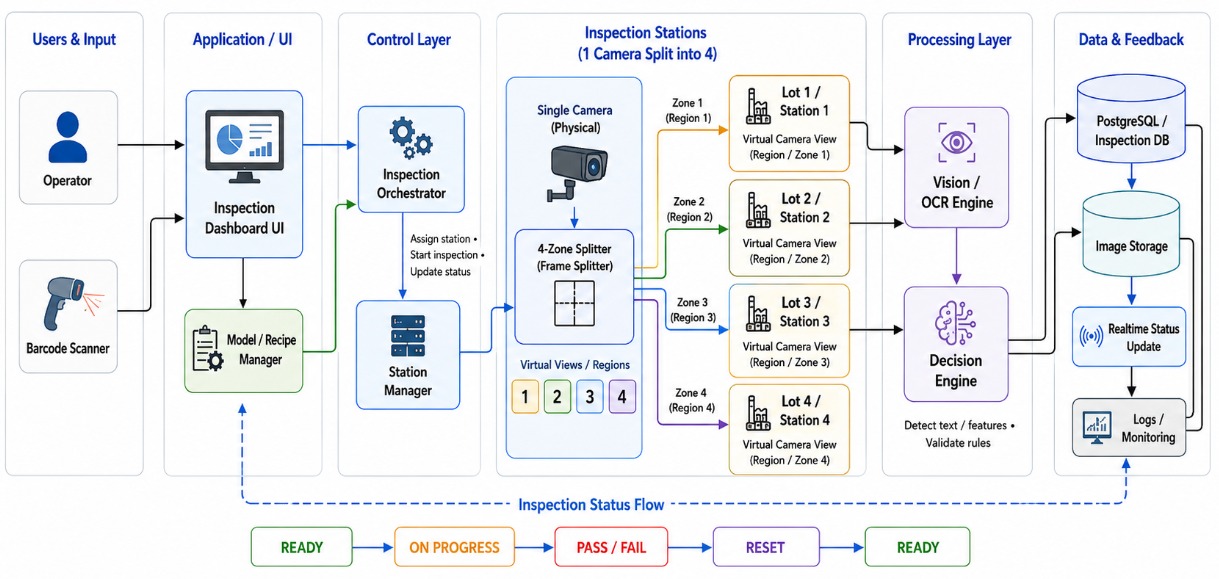
I developed an OCR-based vision inspection system that automatically detects and validates the "INITIAL SETTING" text on the LCD using a single industrial camera. The captured image is divided into four inspection regions, allowing multiple remote units to be checked within one inspection cycle.
2. System Architecture & Workflow
[Part in Jig]
      │
      ▼
[Single Industrial Camera]
      │
      ▼
[Python Vision System]
  ├─ Perspective Correction
  ├─ 4-ROI Splitting
  ├─ Image Preprocessing
  ├─ OCR Extraction
  └─ Database Validation
      │
      ▼
[Inspection Decision]
    ┌───────┐
    ▼       ▼
 [PASS]   [FAIL]
    │       │
    └───┬───┘
        ▼
[Inspection Result DB]
3. Technical Highlights & Automation
- Single-Camera Multi-Unit Inspection: One industrial camera captures all remote units positioned in the jig and splits the frame into 4 independent ROI zones.
- LCD-Specific OCR Pipeline: The vision pipeline focuses on the LCD area and extracts the displayed text for validation.
- Target String Validation: OCR output is normalized and compared against the expected value: "INITIAL SETTING".
- Image Preprocessing: Perspective correction, contrast enhancement, and binarization are applied to improve LCD text readability.
- Independent ROI Evaluation: Each remote unit is evaluated separately, allowing individual PASS / FAIL results within the same camera frame.
- Real-Time Operator Feedback: Inspection status is displayed immediately for each inspection region.
- Database Logging: Inspection results are stored for traceability and later analysis.
4. Measurable Results & Impact
- Automated the manual verification of the "INITIAL SETTING" LCD message.
- Enabled up to 4 remote units to be inspected from a single camera frame.
- Improved inspection consistency by replacing subjective visual checks with OCR-based validation.
- Reduced repetitive operator workload during LCD inspection.
- Improved traceability by recording PASS / FAIL inspection results in the database.
Engineering Retrospective
Industrial automation demands defensive programming against noisy electrical signals and mechanical variances. Physical jig tolerance and lighting geometry matter as much as the algorithm itself.
Related Case Studies
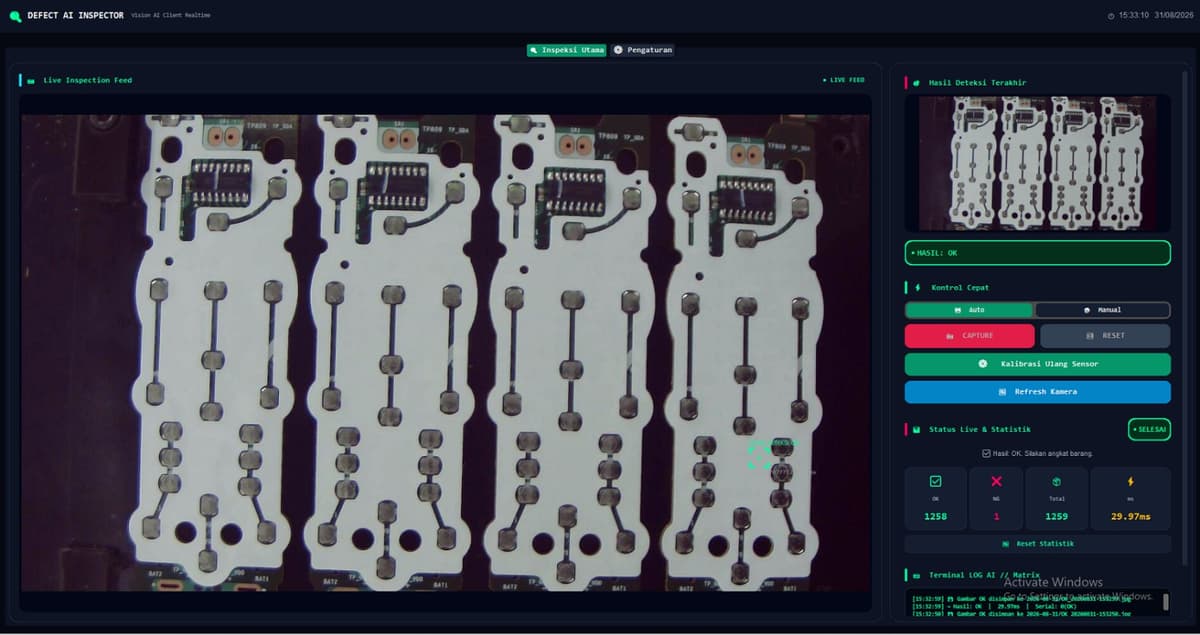
Deep learning computer vision model (YOLOv8) deployed to automatically detect and classify NG (defective) components and surface flaws on high-volume production lines.